Wind Turbine Blade Failures Are a Billion-Dollar Problem. Prevention Holds the Key
Wind power is expanding at a pace the sector hasn’t experienced before. Alongside the impressive scale-up, comes a growing and costly challenge: blade damage. From frequent high-profile failures to escalating repair bills, the issue is one of the most expensive and troublesome headaches facing the industry.
In the past year several dramatic incidents have made headlines. A 30-metre blade snapped and fell in Plymouth, Massachusetts. In Perth, Scotland, a triple blade detachment saw numerous components crash to the ground. These events capture public attention, but also point to a deeper, systemic issue affecting projects worldwide.
Recent analysis suggests that in the US this year blade repair expenditures surpassed $1 billion. Repairing a damaged onshore blade starts at around $30,000, while a full replacement can exceed $500,000. The drivers behind these failures are more complex than a single root cause.
The consequences of scaling up turbine size
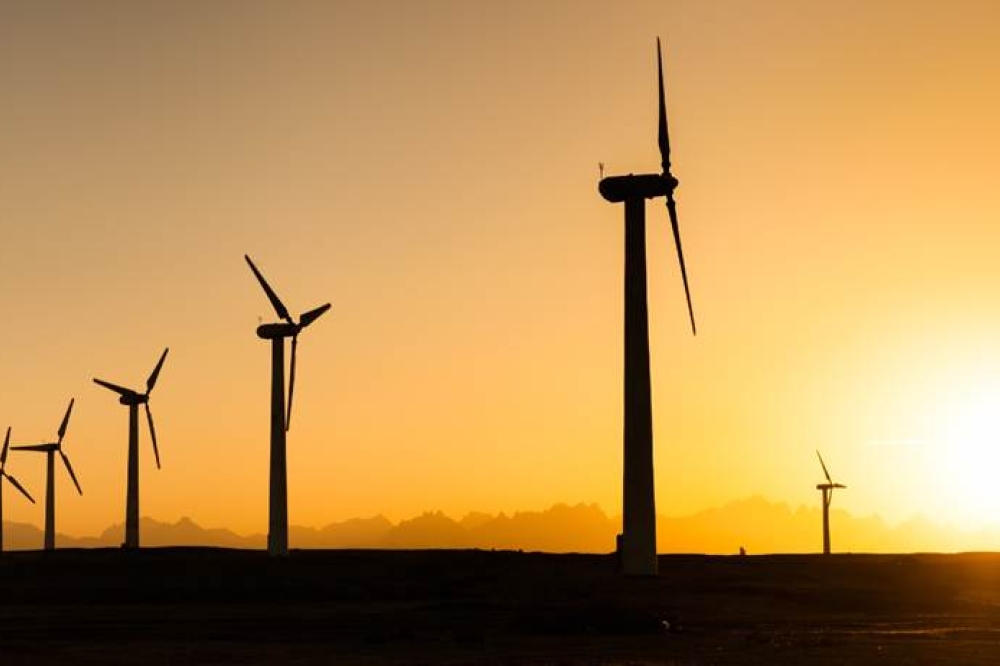
The wind industry has increasingly been locked in a race to build bigger, more powerful turbines. The logic is sound – larger blades can capture more wind, produce more electricity, and drive down levelised costs. Those incentives have encouraged manufacturers to push rapidly through design iterations, stretching engineering limits in the process.
The results are undeniable. Machines of 15MW or more are now being deployed in select markets, with some blade lengths exceeding 120 metres. China’s turbine makers are especially active. Guangdong-based Mingyang recently unveiled a 50MW floating concept – a record-shattering proposal for single-unit offshore capacity.
But scale introduces complexity. As machine sizes swell, the consequences of component issues also increase. Larger blades are harder to manufacture consistently, harder to transport without stress damage, and significantly harder and more expensive to replace on site.
Recent research from TMGX reinforces this concern. Offshore turbines above 8MW are experiencing far higher early-life failure rates, with more than half seeing major issues within their first two years of operation. It’s a sign that the sector’s rapid technological evolution may be outpacing the supply chain’s ability to deliver consistent manufacturing and quality assurance at unprecedented sizes.
A strained supply chain slows down repairs
Securing a replacement blade – and the specialised team required to install it – is rarely straightforward.
In today’s market, supply chains remain stretched by a combination of geopolitical tensions, global transportation pinch points, and the sheer volume of new turbines being installed. More than 23,000 new units went up worldwide last year, adding significant pressure to already-thin maintenance resources.
When a blade fails operators often face long waits for replacements. Logistics compound the difficulty. Cranes capable of lifting modern turbine blades are highly specialised and in short supply, and crews trained to conduct complex repairs are frequently committed elsewhere. Without both the right equipment and the right expertise, attempting a repair becomes unsafe or simply impossible.
During delays turbines sit idle. And with downtime representing revenue lost by the hour, the indirect costs of supply chain bottlenecks can quickly equal or exceed the repair costs themselves. For owners and operators, these interruptions have become a major source of financial uncertainty.
The reputational ripple of public failures
Not all consequences of blade failures can be measured financially. Public perception – particularly at a time when renewable energy projects often face intense local scrutiny – can be just as significant.
Wind asset owners understand that community trust is fundamental. Turbines often operate close to homes, farmland, fishing grounds, or busy coastlines. When a blade detaches or debris washes ashore, residents naturally worry about safety and environmental impact. Local authorities, eager to avoid further incidents, may order temporary shutdowns of entire sites while investigations take place.
That dynamic was on full display at Vineyard Wind 1, off Nantucket, last summer. After a blade collapsed from one of the offshore turbines, authorities suspended
operations across the project. Beaches were closed when fragments appeared onshore, and the story spread from regional news to national outlets. Today, inquiries into what caused the failure, and whether similar issues could arise elsewhere, remain ongoing. For the project and the community, the reputational fallout has not yet subsided.
Prevention as the industry’s most powerful tool
While blade damage cannot be eliminated entirely, the industry has reached a point where most failures are detectable and manageable long before they become catastrophic. But only if owners and operators have the right insight into what’s happening to their blades in real time.
Currently, many rely primarily on annual drone inspections to assess external blade condition. Drone imagery is valuable, but the limitations are clear. They only capture the exterior surface, and only at a single point in time. Internal cracking, laminate separation, and structural fatigue often begin long before they are visible to a drone.
This is where advanced blade condition monitoring systems (CMS) are stepping in. By measuring vibration, displacement, and acoustic responses from inside the blade, CMS technology can identify subtle anomalies, often months before they become visible or pose a structural risk. Early detection transforms the economics of maintenance. Small, planned repairs are vastly cheaper and easier than emergency replacements.
A growing number of owners and operators are now integrating blade CMS into both new installations and retrofit programmes. The result is a shift from reactive to proactive management – an essential evolution as turbine sizes continue to rise.
The path forward
The wind industry’s expansion is a global success story, but its growing pains are increasingly expensive. Blade failures are not inevitable side effects of scale, they are challenges that can be addressed through smarter monitoring, better planning, and proactive maintenance strategies.
As turbines continue to grow in size and sophistication, the sector has an opportunity to pair that growth with equally sophisticated predictive maintenance tools. With the right technologies in place the industry can break the link between larger turbines and higher failure rates, and ensure that future wind projects generate maximum power while keeping O&M expenses firmly under control.