Wind turbine market to be worth $300.12 billion by 2034
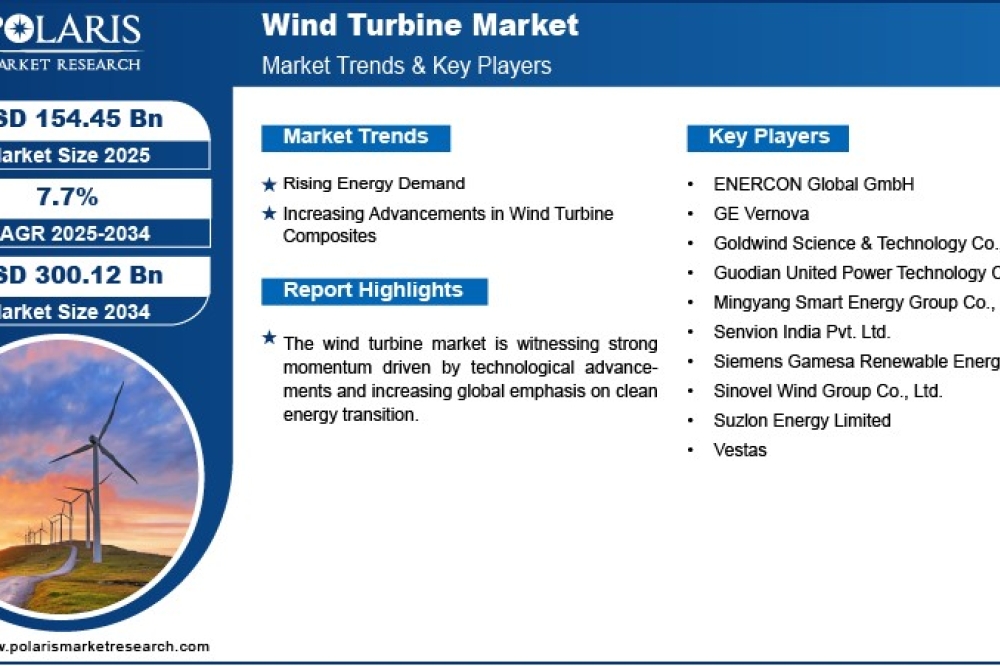
According to the latest Wind Turbine Market research report by Polaris Market Research, the industry is on track to expand from a valuation of USD 143.69 billion in 2024 to an estimated USD 300.12 billion by 2034, reflecting a CAGR of 7.7% during the forecast period (2025–2034).
Renewable Energy Momentum: Powering Global Growth
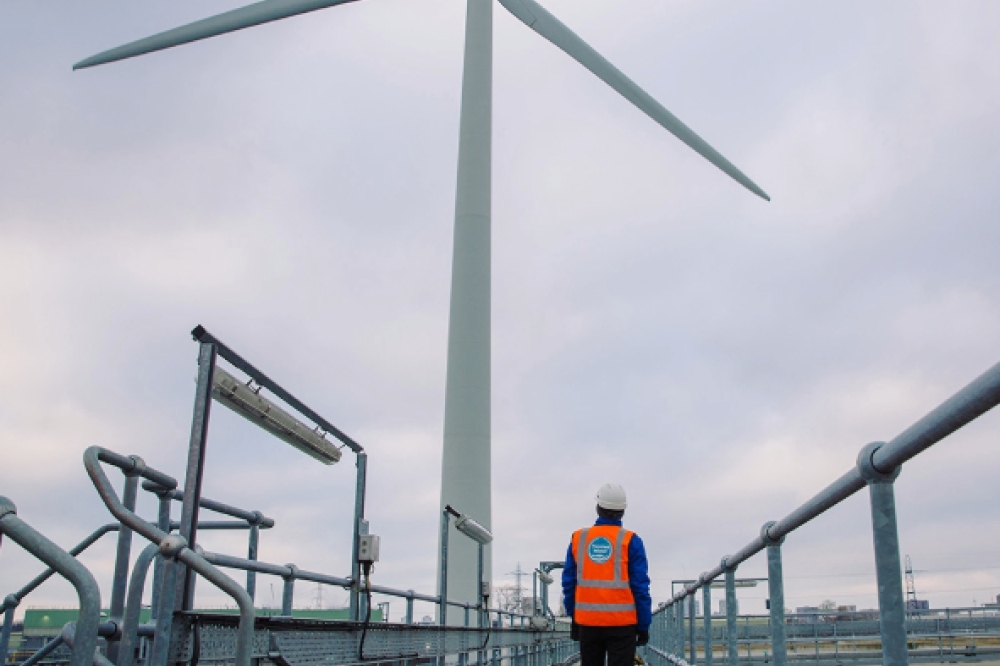
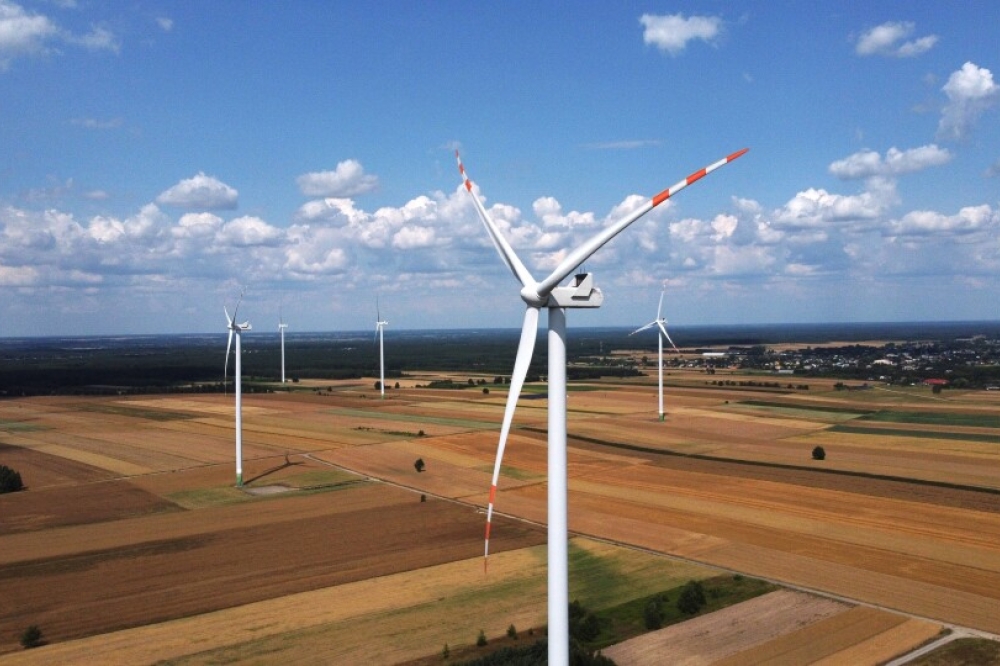
Wind turbines are mechanical devices that convert the kinetic energy of wind into electricity — a cornerstone of the global transition to clean, sustainable energy. This market growth is underpinned by rapid deployment of both onshore and offshore wind energy infrastructure, strong policy mandates aimed at decarbonization, and rising electricity demand across emerging and developed economies.
With countries reaffirming climate commitments and boosting renewable portfolios, the Wind Turbine Market is gaining unparalleled attention from governments, utilities, and private investors alike. This trend is particularly strong in regions where energy security and climate goals are top priorities.
Key Market Drivers Shaping Industry Outlook
Rising Global Energy Demand:
Rapid industrialization, urbanization, and electrification are driving global energy requirements to unprecedented levels. Wind energy, with its scalable capacity and zero-emission profile, is increasingly relied upon to meet peak and base-load electrical needs sustainably.
Offshore Wind Expansion:
Offshore installations are projected to experience significant growth due to access to stronger and more consistent wind resources at sea, which translate into higher energy yields compared to many onshore sites. The offshore wind segment is becoming a core driver of long-term market expansion.
Technological Innovation:
Advancements in turbine design — including increasing rotor diameters, blade efficiency, composite materials, and predictive maintenance systems — are boosting energy output and lowering costs per kilowatt-hour. Innovation in sustainability, such as closed-loop recycling solutions for turbine components, is becoming a competitive differentiator.
Policy and Regulatory Support:
Robust policy frameworks and renewable energy targets in key markets like North America and Asia Pacific are enabling favorable investment climates. Regional mandates, tax incentives, and renewable procurement standards are accelerating wind turbine adoption.
Segment Insights: What’s Driving the Market?
Axis Type: Horizontal-axis turbines dominated the market in 2024 due to higher efficiency and broader utility-scale adoption.
Installation Type: Offshore wind projects are set to witness rapid growth, driven by significant capital investment and expanding coastal wind farm developments.
Utility Integration: Utility-scale installations continue to lead demand given their capacity for large-scale energy output and improved grid integration.
Regional Outlook: Asia Pacific held the largest revenue share in 2024, supported by manufacturing hubs and strong government initiatives. North America, particularly the U.S., is poised for the fastest growth thanks to supportive policies and growing clean energy investments.
View More Information @ https://www.polarismarketresearch.com/industry-analysis/wind-turbine-market/request-for-sample
Challenges and Industry Barriers
Despite positive momentum, the wind turbine market faces several barriers. High initial capital costs, logistical complexities associated with grid integration, and evolving regulatory landscapes in certain regions have posed challenges for developers. Emerging markets with nascent infrastructure are still navigating these constraints.
Additionally, geopolitical tensions and supply chain disruptions — particularly in the wake of fluctuating demand patterns — continue to test resilience in the sector. However, many stakeholders view these challenges as temporary headwinds amid a long-term growth trajectory.
Competitive Landscape: Powerhouse Players and Strategic Growth
The global wind turbine market remains highly competitive, with established players driving innovation and expanding regional footprints. Key industry participants include ENERCON Global GmbH, GE Vernova, Goldwind Science & Technology Co., Ltd., Mingyang Smart Energy Group Co., Ltd., Siemens Gamesa Renewable Energy, and Vestas, among others.
These companies are investing in next-generation blade technology, predictive analytics, and enhanced turbine connectivity solutions to hold an edge in a fast-evolving market. Strategic alliances, joint ventures, and collaborations aimed at expanding offshore capacity and cross-border supply chains are becoming increasingly common.
Looking Ahead: Strategic Opportunities in Wind Energy
As the world continues its shift toward low-carbon energy systems, the wind turbine market is set to play a pivotal role in the global energy mix. Predicted growth through 2034 underscores the sector’s potential as a key enabler of renewable energy goals.
Investors, utilities, and policymakers are sharpening their focus on scaling wind energy infrastructure and harnessing its full economic and environmental benefits — from job creation in manufacturing to lower power generation costs and reduced carbon emissions.
In summary, the Wind Turbine Market stands at the forefront of the renewable revolution, offering compelling growth opportunities and a sustainable pathway for global energy transformation through 2034 and beyond.