Energy-efficient power by the Kilowatt hour

Energy transition – the state of play
The UK has set a legally binding target to reach net zero by 2050 and the Government has ambitions to decarbonise the energy grid by 2030, with a mission to make the UK a 'clean energy superpower' .
According to Siemens’ 2025 Infrastructure Transition Monitor (ITM) , UK organisations are increasingly concerned about meeting 2030 decarbonisation targets – but remain committed. More than three in five (64%) decision-makers participating in the biennial study expect to accelerate decarbonisation efforts in the year ahead. 74% have fully developed roadmaps to reach targets.
However, meeting ambitious targets will require a great deal of capital investment in energy efficiency and clean energy transition.
Around five years ago, the Government’s independent climate advisers, the Climate Change Committee, estimated that additional annual investment of over £40 billion would be needed as early as 2025, combining both private and public investment, increasing to around £50 billion between 2030 and 2050 . These financial requirements still stand.
Although clean energy remains the long-term objective, reducing consumption is the more immediate and achievable aim. In business, many processes remain energy-inefficient and there is huge scope to reduce consumption and therefore costs. Those costs, moreover, remain inflated compared with five years ago, so the business case for transition has become even more compelling.
Capitalising energy transition
Nevertheless, in a climate of economic uncertainty, many organisations feel uncertain about major capital spending commitments. Most businesses want to stay agile, able to react to circumstances as they unfold, without their precious funds being locked up in capital equipment.
This uncertainty is reflected in a recent survey of all stakeholders in the energy transition industry by Deloitte which tells us that around 60% of respondents are confident that the UK will be net zero by 2050 but many are not confident in some of the interim targets.
The answer is to raise third-party capital, leaving liquid funds free for flexible and agile day-to-day working capital.
A piece published by the London School of Economics emphasizes this point, noting the need to “Leverage private sector investment through a clear and predictable policy framework based on a national growth, innovation and skills strategy; create a dedicated, independent policy institution, focused on finding solutions to the country’s productivity problem .”
The demands of smaller scale projects
In the energy transition market as it currently stands, we see a clear differentiation between massive infrastructure projects, and the mass of smaller energy-efficiency and clean energy initiatives.
The huge projects, such as the industrial hydrogen hubs in current government policy , require one type of financing – usually some form of equity or project finance participation. Clearly, it is critically important that these mega-projects move forward and help drive the clean energy market.
They are, however, not enough on their own. We also need to see a mass of investments in smaller scale, local, even portable energy-efficiency projects. In combination with the mega-projects, they will create an accelerating wave of transition. Yet smaller companies, organisations and – most importantly – their energy solutions suppliers do not have the deep pockets available to huge projects. Finding financiers who have the appetite to finance these smaller projects is also an issue.
For a start, the availability and/or conditions for business credit have tightened over the last five or so years, since the pandemic crisis. But the story is more complex than credit conditions for the investing company. As we have already said, no-one wants their precious capital tied up in equipment where it could be better deployed in business growth. And this is as true for the solutions supplier as for the end customer. The supplier of energy-efficiency technology certainly doesn’t also want to finance sales to their customers and tie up their own capital. In fact, in many cases, they can’t access the capital to do those kind of sales deals in the first place.
This is where Siemens Financial Services (SFS) is partnering with a variety of energy-efficiency solutions providers to provide the capitalisation and help more projects move forward.
‘Behind the meter’ drives growth as ‘pay per kWh’
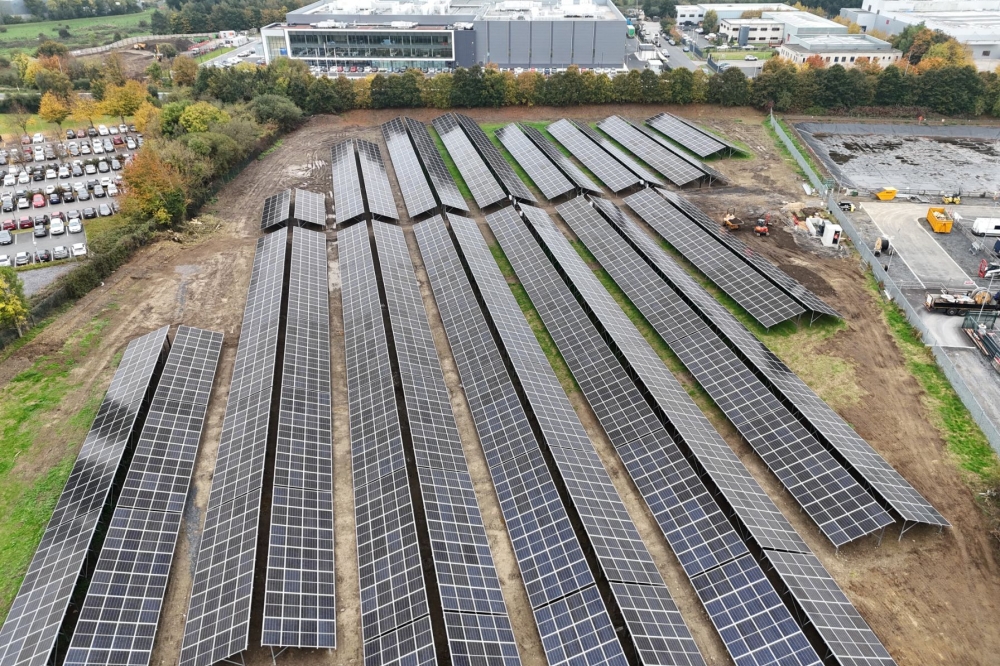
A significant proportion of the current investment in energy efficiency is what we term ‘behind the meter’. In other words, this is where organisations invest in reducing the cost of the energy they themselves consume. Think of a business campus; or a retailer; or a horticultural business; or a hospital; or a manufacturer; or a local authority; or a university; the list could go on.
The point of engaging with a method of reducing your own consumption and/or price-per-unit, is that you are dealing with an extremely reliable demand stream. Peak loads may still be topped up from the Grid. This also affects the financier’s approach to making the financing scheme affordable and cash-flow friendly. The risk profile, although still demanding detailed due diligence from the finance provider, is reliable and therefore more risk-friendly. It also contrasts with small energy suppliers into the open market, who may experience volatility and unpredictability in their flow of demand.
Power Purchase Agreements
A Power Purchase Agreement (PPA) is a long-term contract between a clean energy provider and a customer. The customer agrees to purchase electricity generated by a renewable energy system at a fixed rate per kilowatt-hour (kWh), over a fixed term.
For installers of solar, wind, battery storage, and other clean technologies, PPAs are a powerful tool for business growth. By removing the budgetary barrier for customers, and the associated concerns around operation & maintenance and other risks of ownership, installers can close more deals, open the door to long-term revenue, take on larger projects, and differentiate their offering.
From an end customer’s perspective, PPAs are a practical and low-risk way to adopt clean energy without the burden of upfront capital investment. This makes clean energy immediately accessible, especially for businesses and public sector organizations looking to reduce operational costs and carbon emissions, while preserving financial agility. As adoption scales, this model plays a crucial role in accelerating the shift to a cleaner, more resilient energy system.
In its most sophisticated form, these projects can be delivered on a price-per-unit basis. This means that the supplier is not selling more energy-efficient equipment – they are selling a saving. And for energy generation equipment suppliers, they are effectively selling a guaranteed price per kWh over the financing period. The financier has to have an intimate knowledge of the industry, its technology and the way these projects pay back in the field. They also have to know how to conduct the necessary due diligence to structure the financing to be affordable yet mitigate risk – in other words, so it works well for all parties. The ideal outcome is a structure which is simple to administer, but which behind the scenes has balanced the technical financing issues (title, guarantees, collections, VAT, etc) so that risk is well managed.
To give an idea of the energy-efficiency savings involved, an SFS analysis of a series of case studies (solar, CHP, etc) found that, where the installation was completely free of any revenue from the grid, savings over the financing period ranged from 8% to 25% (the range varies as a result of supporting works required to integrate the solution into the existing infrastructure).
In one example, a commercial solar installer partnered with SFS to deliver a 150 kW rooftop system to a logistics company. The client paid nothing upfront and agreed to a 20-year Power Purchase Agreement at a fixed rate lower than their existing utility bill. The installer was paid for the installation and secured a long-term Operation & Maintenance (O&M) contract, while the client enjoyed immediate energy savings.
Key Takeaways
In conclusion, the UK’s energy efficiency and clean energy transition is well under way. Mega-projects are, however, not enough on their own to truly move the dial.
• Real momentum for transition requires imaginative and expert financing methods for that mass of smaller projects.
• They are complex to finance and need a deep understanding of the sector and its technologies.
• Suppliers of energy-efficiency solutions are partnering with specialist financiers such as SFS to ease the transition process for business energy consumers, cutting their consumption and costs without the need to find (and tie up) capital funds.
• We are starting to see an emerging volume of arrangements that allow the solutions supplier to offer energy users a guaranteed (reduced) cost per kWh to bring down their consumption and cost of the energy the normally use – all without capital commitment.
A combination of large and small energy transition projects is required to drive towards the UK’s ambitious climate targets. For the smaller initiative, expect to see more and more of these cost per kWh arrangements on the market as the technique takes off over the next few years.