Europe leads $496.7 billion renewable energy boom
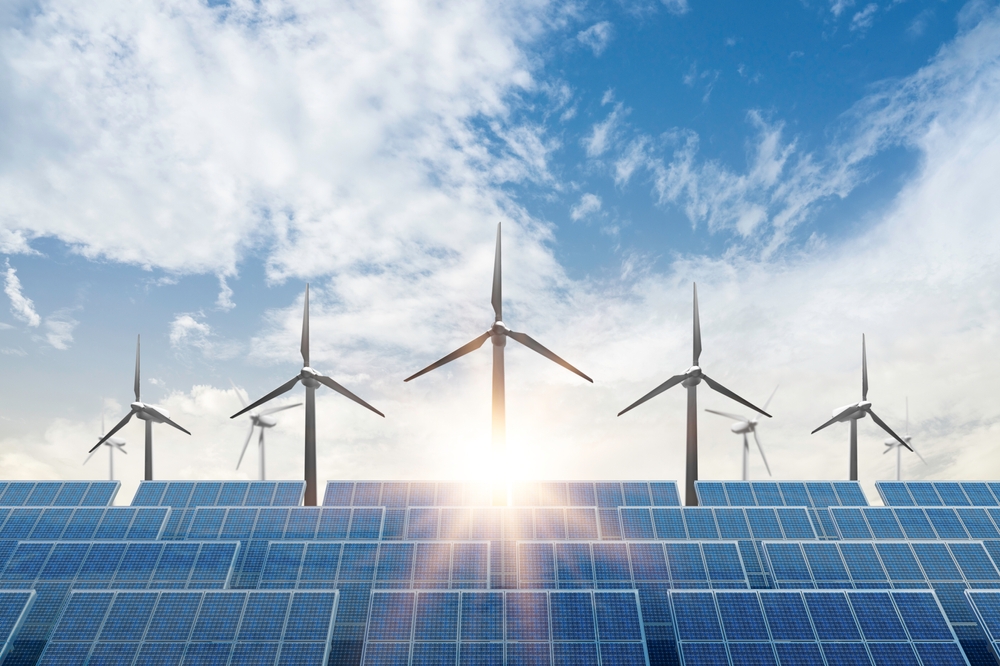
Europe has cemented its position as the world's largest renewable energy infrastructure market, commanding US$202.7 billion in investment across 1,035 transactions in 2025, an 82% year-on-year increase, according to new research from Ansarada, a leading infrastructure procurement platform.
Despite this capital influx, critical weaknesses in infrastructure procurement execution threaten to undermine delivery at scale. The report, surveying 150 senior executives across APAC, EMEA and the Americas, exposes a stark gap between capital flowing into European renewables and the operational capacity to deploy it efficiently. Only 46% of EMEA respondents described their most recent procurement process as "very efficient," while transaction volumes rose just 4% despite the 82% surge in investment value.
"Europe has established itself as the global benchmark for renewable energy infrastructure, with regulatory frameworks and supply chains that attract institutional capital at scale," said Justin Smith, Managing Director at Ansarada. "But there's a critical disconnect between the ambition reflected in investment figures and the procurement processes actually delivering projects. Capital is abundant, but execution capability is the binding constraint."
Transparency gap puts capital at risk
Environmental, social and governance (ESG) considerations have become core components of risk management. For many institutional investors, deep ESG integration is now a primary filter used to determine whether assets are investable or off-limits.
The report found that 80% of EMEA respondents deeply embed ESG considerations in their infrastructure procurement frameworks, the highest globally. However, the findings expose a disconnect between stated commitments and operational reality. Despite Europe’s mature regulatory environment and tightening EU sustainability mandates, a significant transparency deficit remains, increasing the risk of compliance breaches and investor scrutiny.
While 90% of EMEA respondents describe transparency and auditability as “very important” or “essential” to infrastructure procurement, with 42% calling them essential, nearly one-third (32%) admit their processes lack clarity for internal stakeholders. In a region where ESG disclosure requirements are becoming more stringent, that lack of visibility creates legal, reputational and funding risk.
Smith said, "The transparency gap isn't just an operational inefficiency; it's a commercial risk. Institutional investors and project financiers increasingly demand auditable evidence that ESG criteria are genuinely embedded in procurement. Organisations that can’t demonstrate that risk losing access to the capital that large-scale renewable projects need."
Digital fragmentation undermines efficiency
A key driver of both the efficiency and transparency gaps is digital fragmentation. While 91% of organisations globally use specialised procurement software, EMEA organisations deploy an average of 3.8 different disconnected systems, the highest fragmentation globally. Most critically, 55% still rely on email for sensitive bidder correspondence.
"Organisations think they've digitised, but they've created what we call a 'Frankenstack' of disconnected tools," Smith said. “When you're managing multi-billion-pound tenders across fragmented platforms and email, you're not just inefficient, you're exposed. Without a unified system, organisations simply cannot provide the transparency that external stakeholders require."
Global context
Europe's execution gap comes as global renewable energy infrastructure investment reached US$496.7 billion in 2025, up 49% year-on-year. Despite global transaction volumes rising by only 7%, the dramatic increase in total investment value signals capital concentrating into fewer but larger and more integrated projects, a shift that places even greater emphasis on procurement efficiency and execution capability.
"The question for Europe is whether procurement processes can match the scale of ambition reflected in investment figures," Smith concluded. "Capital is flowing toward large-scale and integrated projects, but delivery depends on treating procurement as critical project infrastructure from day one, not an administrative afterthought."